
Architectural Flowers
Benefits and Uses in Interior Design
What makes a flower “architectural”?
Architectural flowers have strong structure, defined lines, sculptural silhouettes and a sense of presence. They behave more like objects than petals; think orchids, magnolias, calla lilies, birds of paradise, branches, and anything with a bold stem or graphic shape.
They bring shape, height, clarity and intention to a space.
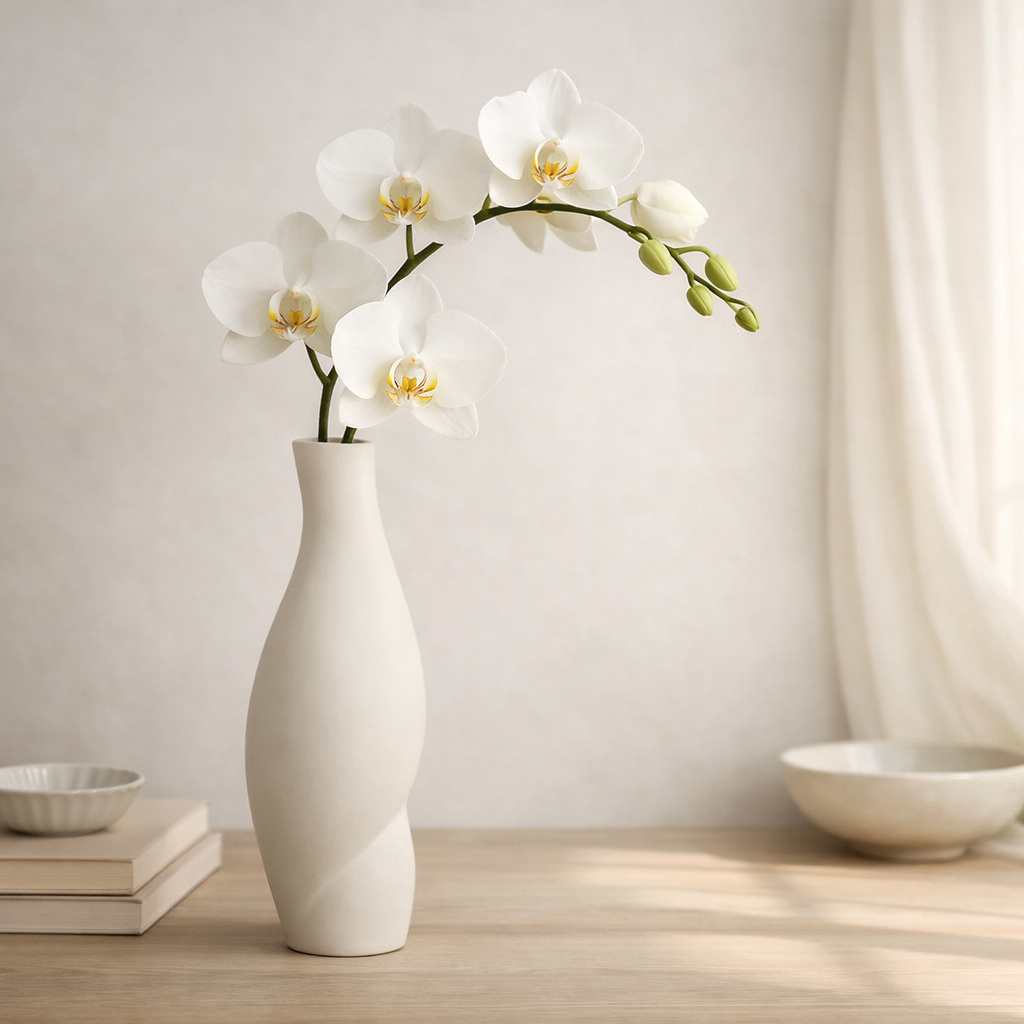
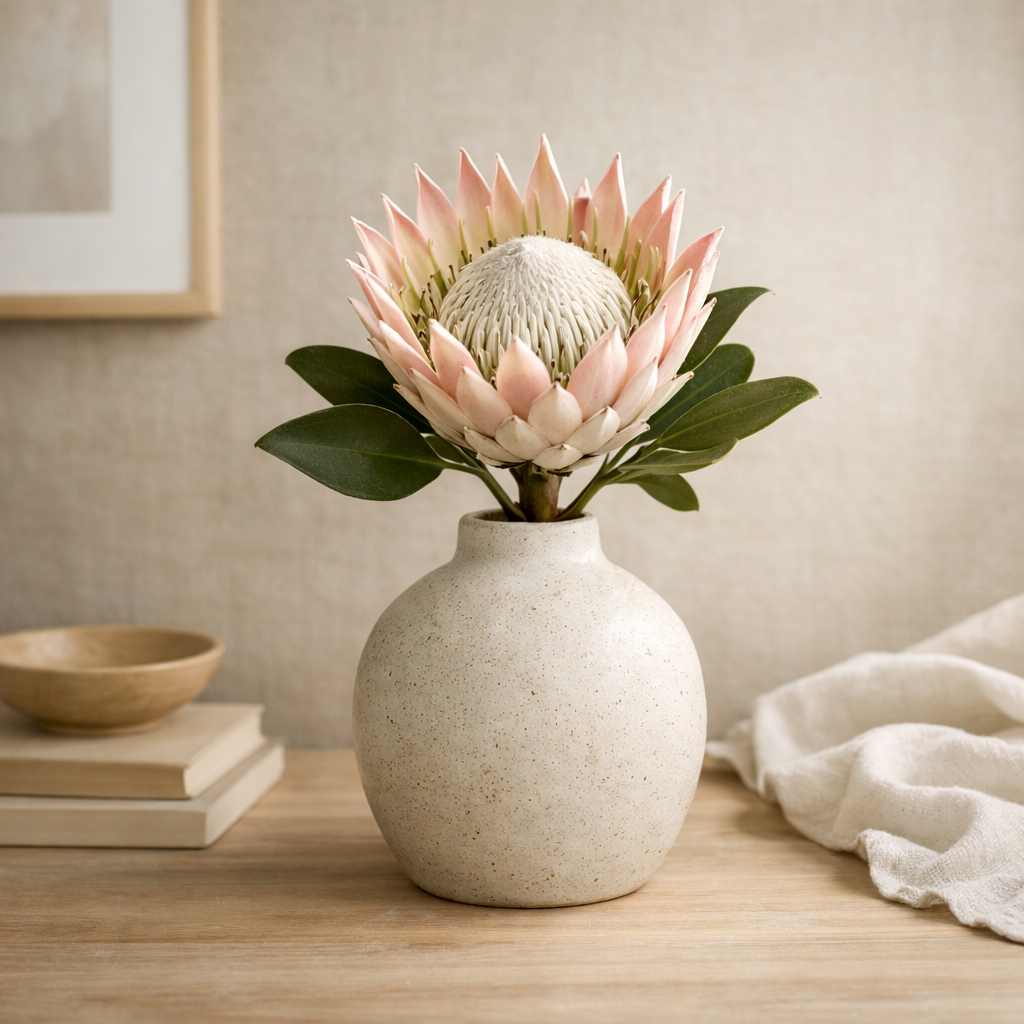
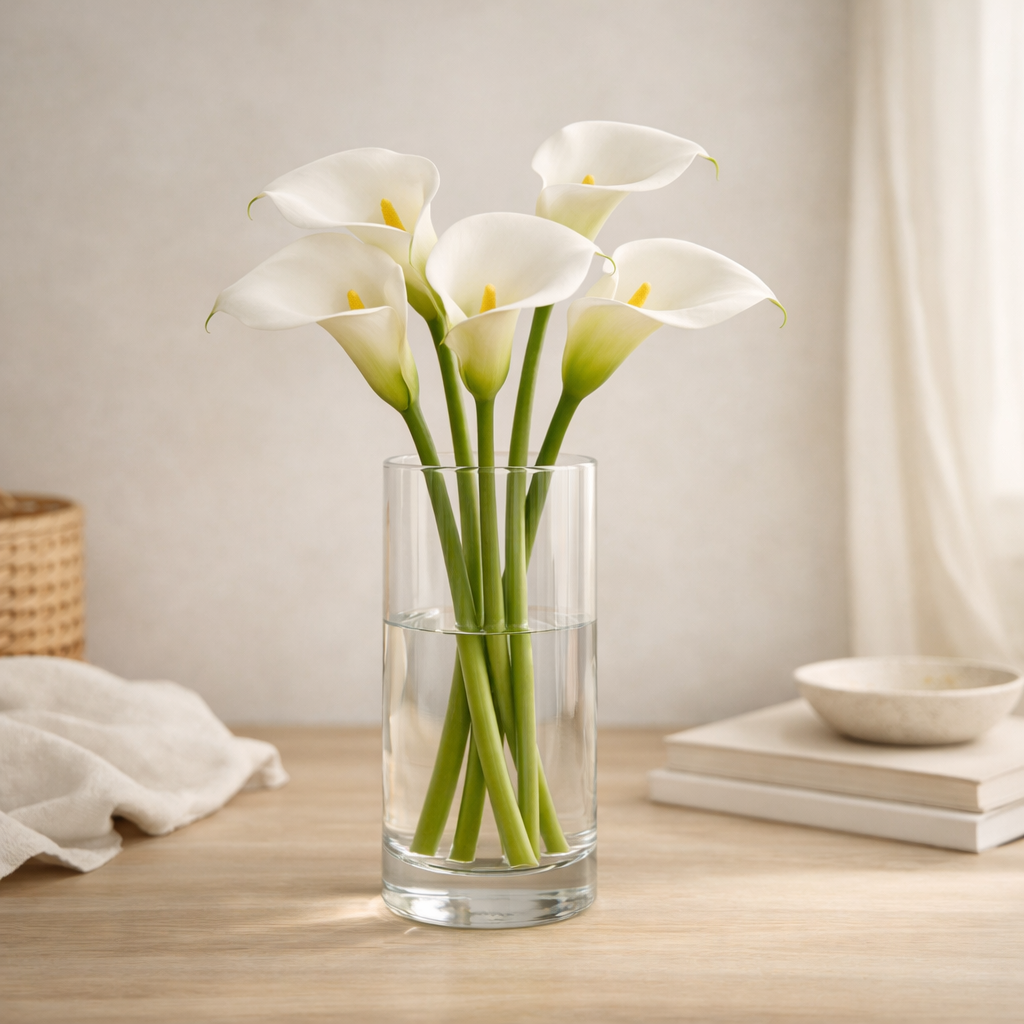
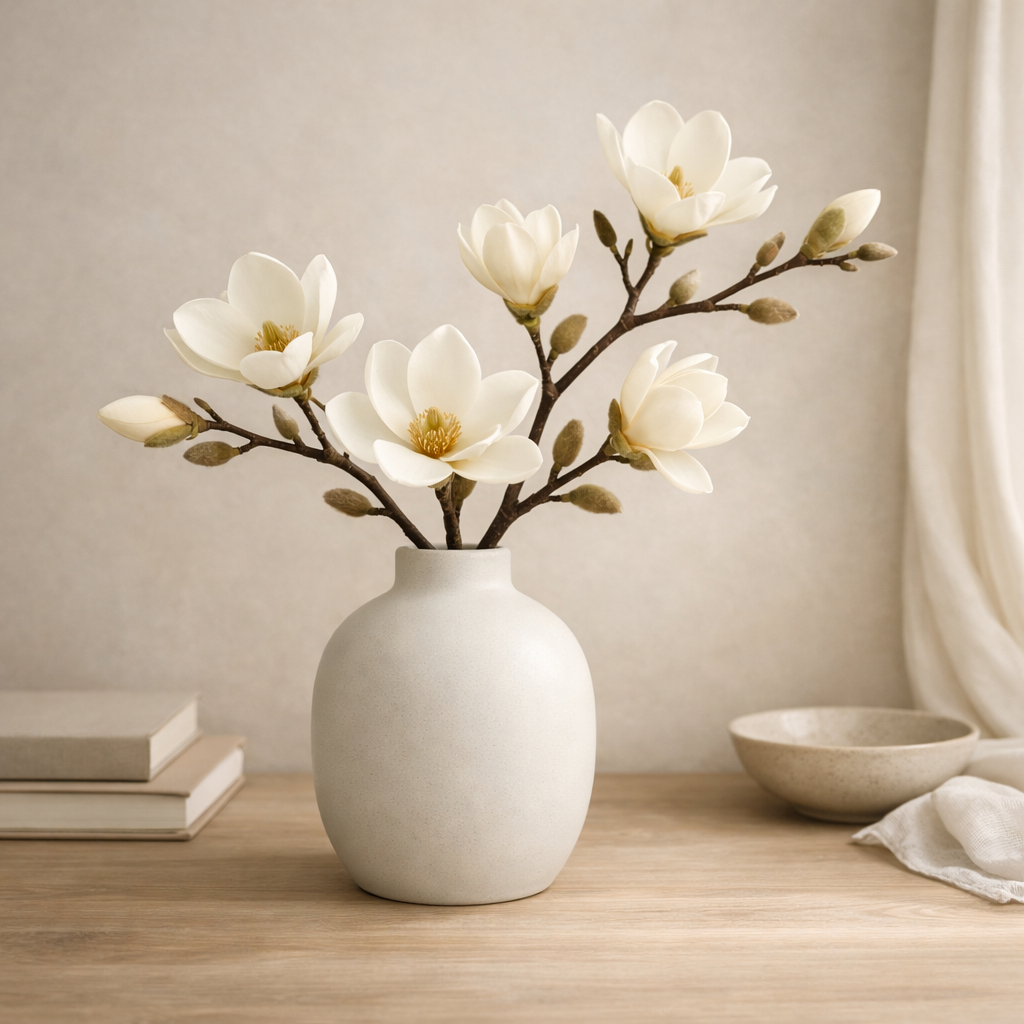
Benefits of Architectural Flowers in Decor
1. They create visual structure
Architectural flowers act like mini sculptures, adding form and definition. They give a room a sense of order, clarity and purpose — especially useful in modern, minimal or contemporary spaces.
2. They can add vertical height and horizontal movement
Vertical upright arrangements change the way we perceive the architecture of a room by:
drawing the eye upward to lift low ceilings
create a sense of openness to tight corners by bringing visual interest
balance low, horizontal furniture such as long sofas and expansive console tables
Design Idea: Vertical arrangements are incredibly practical for small surface spaces because the design grows upward rather than outward making it ideal for side tables, narrow entryways or even small apartments.
Horizontal, low profile, arrangements look like deliberate, living sculptures. They:
balance wide architectural features
create a grounding effect
maintains open sightlines
showcases individual blooms
They’re one of the easiest ways to change the architecture of a room without renovating.
Design Idea: Horizontal arrangements are incredibly practical for dining tables, kitchen islands or coffee tables. They provide a striking centerpiece without blocking conversation or views across the room.
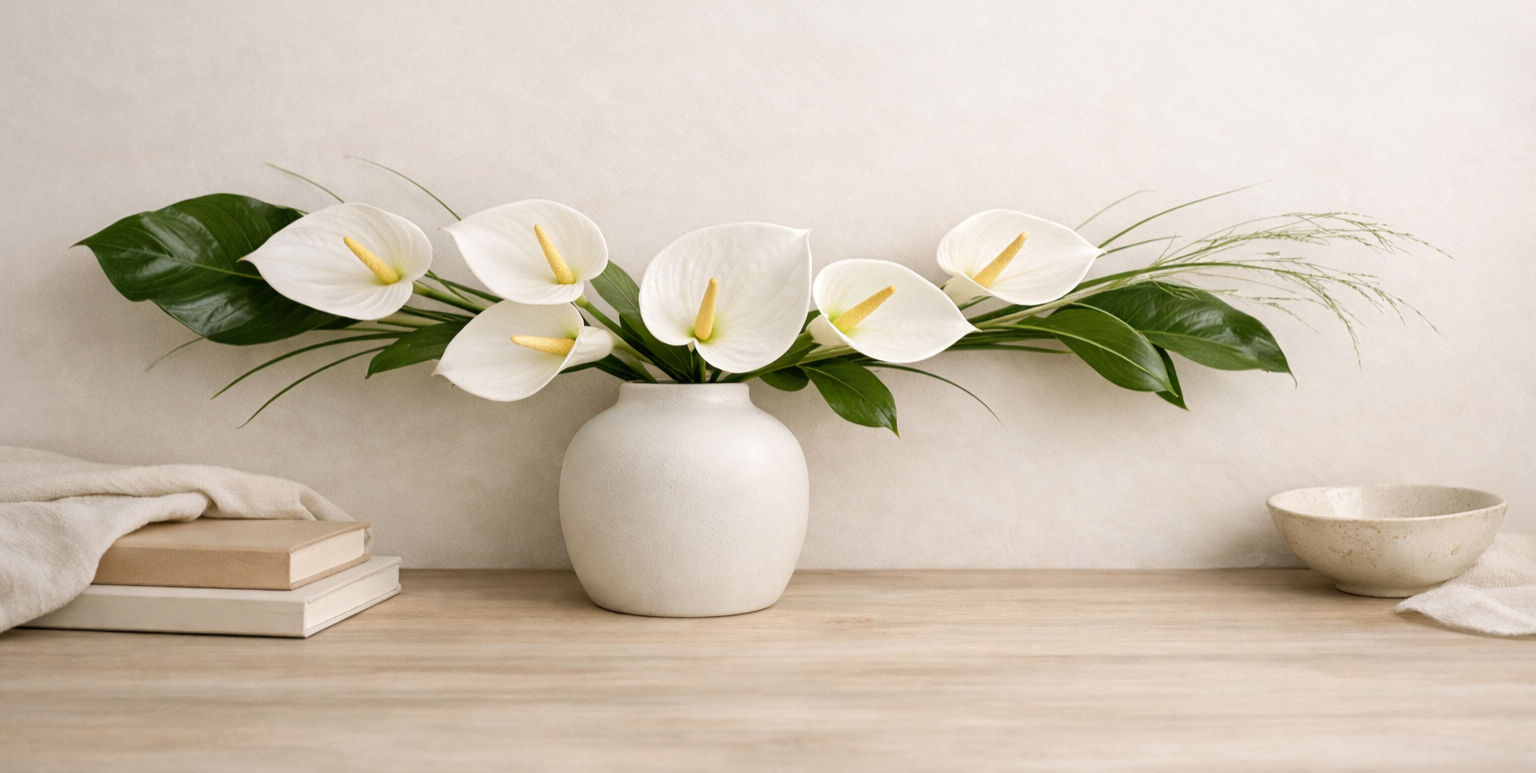
White Anthuriums with glossy green leaves arranged in a balanced, linear composition.
3. They introduce bold, clean lines
Where soft flowers bring curve and romance, architectural flowers bring line, edge and direction. They’re perfect for:
balancing soft furnishings
adding contrast to rounded décor
sharpening a space that feels too “floaty”
4. They hold space with confidence
Architectural blooms have presence. They don’t whisper — they anchor. This makes them ideal for:
entry consoles
dining tables
kitchen islands
large open-plan rooms
They behave like a statement piece without overwhelming the room.
5. They photograph beautifully
Their defined shapes and clean silhouettes translate exceptionally well in:
product photography
bundle covers
flatlays
styled vignettes
They add clarity and sophistication to visual storytelling.
6. They work across multiple decor styles
Architectural flowers suit:
Modern / Contemporary — clean, sculptural, minimal
Coastal Luxe — elegant, airy, refined
Soft Minimalism — quiet, intentional, uncluttered
Japandi — organic form, negative space, simplicity
Modern Country — adds structure to soften rustic textures
They’re one of the most versatile tools for elevating a space.
How to Use Architectural Flowers in Styling
1. Use them as a focal point
One stem or one cluster is often enough. They shine when they’re not competing.
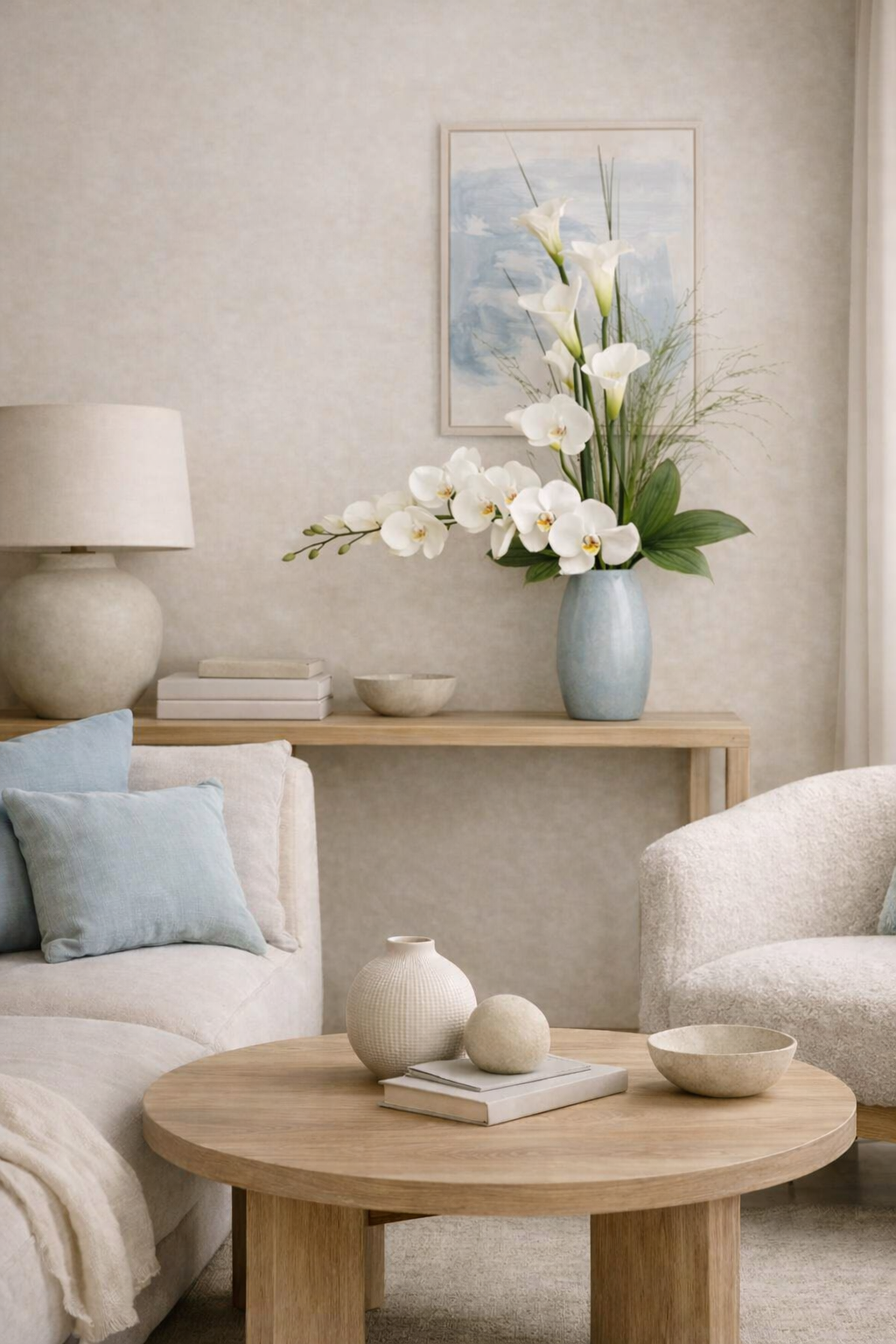
Soft blue and beige room with the focus on the architectural flower arrangement
2. Pair with simple vessels
Architectural flowers love:
tall cylinders
sculptural ceramics
matte finishes
clear glass for a gallery-like feel
The vessel should support the line, not fight it.
3. Keep arrangements minimal
These flowers don’t need fullness — they need space. Negative space is part of the design effect.
4. Use them to balance softness
If a room has:
too many curves
too much fabric
too much visual “fluff”
Architectural flowers bring the grounding you need.
5. Use them to create rhythm
Their repeated lines can guide the eye through a room, especially in:
long hallways
open-plan living
shelf styling
They create a sense of flow.
Architectural flowers are your sculptors. They bring height, shape, clarity and intention — the design equivalent of a strong line drawing. Where soft flowers soothe, architectural flowers define. Together, they create a balanced, emotionally layered room.